
Prioritizing Deadlegs for Integrity Management
Authors: Zhenjin Zhu, Ph.D., P.Eng. & Hamood Rehman | June 17, 2026
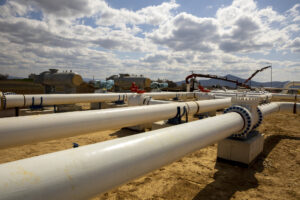 Deadlegs — sections of piping or pipelines with little to no flow — represent one of the most persistent and underestimated integrity risks in oil and gas assets. Although inactive, these segments remain exposed to operating pressures, temperatures and corrosive environments. Over time, stagnant conditions allow solids and water to drop out from the service products and accumulate on pipe floor, creating ideal conditions for internal corrosion, microbiologically influenced corrosion (MIC), hydrate formation and freezing in cold climates.
Industry experience shows that deadlegs have contributed to numerous integrity incidents, with internal corrosion identified as the dominant damage mechanism. Compared to flowing lines, corrosion rates in deadlegs can be significantly higher due to poor convection, lack of oil wetting and biofilm development. Without targeted identification, assessment and control, deadlegs can be insidiously attacked until a leak or rupture occurs.
To address this risk, Altamira has developed a structured, quantitative approach to identify, assess and prioritize deadlegs for integrity management. This methodology enables operators to allocate resources confidently while balancing safety, compliance and operational practicality.
Deadlegs integrity management should be integrated as a critical element of a broader Facilities Integrity Management Program (FIMP), which must be systematically developed and implemented across all facilities.
Understanding the Scope and Challenges of Deadlegs
Industry standards broadly define deadlegs as piping components with no significant or sustained flow. According to API 570 Piping Inspection Code: In-service Inspection, Rating, Repair, and Alteration of Piping Systems, deadlegs are components that normally have little to no flow, while API 2611 Terminal Piping Inspection – Inspection of In-Service Terminal Piping Systems classifies deadlegs as internal areas isolated by valves or systems that are inactive for more than three consecutive months.
In practice, deadlegs are widespread and take many forms, including:
- Blanked branches and blind-ended piping
- Lines isolated by closed valves
- Bypass piping and relief valve inlets
- High-point vents and low-point drains
- Level bridles, sample points and instrument connections
- Spare or idle pump piping
Deadlegs may be permanent — such as those installed for future expansion — or temporary, created during pressure testing, startups, shutdowns or maintenance activities, but never removed.
Compounding the challenge, no two deadlegs behave the same. Corrosion severity varies depending on geometry, connection orientation, length-to-diameter ratio and location within the system. Bottom connections typically experience the most severe corrosion, while top connections present comparatively lower risk. Many deadlegs are also difficult or impossible to pig, lack internal access for cleaning and are poorly suited for chemical treatment. In some cases, ownership and responsibility are further complicated when a deadleg ties into a third-party infrastructure.
Objective: A Risk Based, Defensible Approach
Altamira’s objective is to help operators prevent deadleg-related failures and preserve mechanical integrity through a quantitative, risk-based prioritization process. By evaluating both the likelihood and consequences of failure, each deadleg is assigned a risk ranking that informs tailored inspection, monitoring and mitigation strategies.
This approach allows stakeholders to:
- Prioritize the deadlegs that present the highest risk first
- Optimize capital and operational spending
- Meet regulatory requirements with confidence
- Make transparent, defensible integrity decisions
Step 1: Identification of Deadlegs
Altamira begins by identifying all potential deadlegs through a comprehensive review of:
- Piping and instrumentation diagrams (P&IDs)
- Isometrics and alignment sheets
- Engineering drawings and GIS data
- Operating conditions and product composition
- Historical inspection and maintenance records
- Creating Line Lists and Master Equipment Lists
All idle, unused, decommissioned or abandoned piping segments outside of normal operations are flagged as potential deadlegs for further assessments.
Step 2: Quantitative Risk Assessment
Threat Identification
Each identified deadleg is evaluated for applicable damage mechanisms per API 571 Damage Mechanisms Affecting Fixed Equipment in the Refining Industry, and other applicable standards which may include:
- Internal corrosion such as under-deposit corrosion, corrosion along water seams, top-of-line corrosion, CO2 corrosion, H2S corrosion and Microbiologically Influenced Corrosion (MIC),
- External corrosion and Corrosion Under Insulation (CUI)
- Crevice corrosion
- Hydrate or ice formation
Threat identification considers geometry, service fluid, operating parameters, environmental conditions and surrounding infrastructure.
Consequence of Failure (COF)
The consequence assessment quantifies the potential impact of a deadleg failure based on factors such as:
- Deadleg size, length and operating pressure
- Product type and release volume
- Proximity to populated areas, waterways, nearby facilities, roads, railways and crossings
- Pipeline class location and third-party tie-ins
Consequences are evaluated across three primary dimensions:
- Personnel Safety: estimating exposure to flammable, toxic or explosive hazards
- Environmental Impact: including spill cleanup costs and residual ecological damage
- Business Loss: encompassing repair costs, product loss, service interruptions, regulatory penalties, legal liability and reputational harm
Likelihood of Failure (LOF)
Failure frequency is predicted using asset-specific data, including:
- Material properties, wall thickness and seam type
- Commissioning year and time since last flow
- OFF and ON frequency, duration and magnitude
- Operating conditions, gas composition and water chemistry
- Effectiveness of pigging and inhibition
- Solids, sludge and bacterial activity
- Inspection history, repairs and past incidents
Time-dependent threats are quantified using remaining life estimates derived from engineering assessments, while stable and time-independent threats are evaluated based on historical failure data, inspection records and scenario-based methods in accordance with ASME B31.8S.
Risk Quantification
For each deadleg, risk is calculated as:
Risk = Likelihood of Failure × Consequence of Failure
The risk factor value, often expressed in $/year or $/mile-year, provides a consistent basis for comparison and prioritization across an entire asset base.
Step 3: Risk-Based Prioritization
Using calculated risk scores in conjunction with the operator’s risk tolerance, deadlegs are classified as high, medium or low risk. Altamira then prioritizes monitoring, inspection and mitigation actions based on criticality and operational feasibility. This approach ensures that resources are focused where they achieve the greatest reduction in risk.
Step 4: Developing Targeted Deadleg Management Strategies
A comprehensive deadleg management program which is aligned with regulatory requirements and industry best practices is then developed. Some of the key elements include:
Program Governance
- Comprehensive FIMP focused on deadleg identification, monitoring, inspection and mitigation
- Formal procedures for deadleg identification and tracking
- Corrosion and freezing management protocols
- Standardized draining, flushing and maintenance practices
- A centralized deadleg registry to ensure lifecycle visibility and traceability
Monitoring and Inspection
- Selection of locations for worst-case monitoring (e.g., sags, drains, capped tees)
- Some of the critical high-risk monitoring and inspection locations are:
- Bottom of horizontal deadlegs at 6 o’clock location
- Near the tee and other connections
- Closed valve sections, blind flanges and reducers
- Termination points such as caps and dead ends
- Use of corrosion probes and defined monitoring intervals
- Risk-based inspection in accordance with API 570, utilizing:
- Visual inspections (drones, borescopes)
- Ultrasonic testing (UT) including ultrasonic thickness testing (UTT) and phased array ultrasonic testing (PAUT)
- Radiography testing (RT) including both profile and digital radiography
- Guided-wave ultrasonic testing (GWUT) for buried segments
- Tethered or specialty in-line inspection (ILI) tools
- Pulsed eddy current (PEC) testing
- Infrared thermography
- Neutron backscatter
Mitigation Strategies
Mitigation plans are customized for each high-risk deadleg and typically fall into three categories:
Mitigation Through Design
- Reviewing piping geometry and process design
- Improving internal coatings and corrosion allowance
- Redesigning deadlegs with proper slopes, drains, siphons or traps
- Limiting deadleg length as short as possible
- Preventing the creation of new deadlegs during tie-ins or modifications
Mitigation Through Operations
- Periodic flushing and draining
- Chemical inhibition and biocide treatment
- Hydrate inhibition where applicable
- Maintaining minimum flow velocities when feasible
- Minimizing shut-in duration less than incubation time of localized pitting corrosion
Mitigation Through Maintenance
- Permanent removal or isolation of unused deadlegs
- Cutting, capping, replacement or repair
- Reconfiguration to reduce water retention
- Internal lining, coating upgrades or depressurization
- Terminating deadlegs to lengths less than 3D
A Smarter Way to Manage Deadlegs
Deadlegs will inevitably remain within oil and gas facilities; however, when left unmanaged, they introduce avoidable and unnecessary risk. Altamira’s quantitative, risk-based methodology enables operators to transition from reactive mitigation to proactive integrity management – ensuring that resources are strategically deployed where they have the greatest impact and mitigating the potential for failures before they occur.

Meet the Author
 Zhenjin Zhu, Ph.D., P.Eng.
Principal Engineer
Zhenjin Zhu is a pipeline integrity engineer serving Altamira’s Integrity Department. He holds a Ph.D. in Mechanical & Industrial Engineering from the University of Toronto and is a licensed Professional Engineer (P.Eng.) with over 15 years of experience in pipeline integrity and corrosion engineering. His technical expertise includes pipeline quantitative and probabilistic risk assessments, procedure development, defect assessment, assessment and design for threat control of internal corrosion, external corrosion and stress corrosion cracking.
Zhenjin can be reached at [email protected].
Meet the Author
 Hamood Rehman
Sr. Pipeline Engineer
Mr. Rehman is a seasoned metallurgical and industrial engineer with over 20 years of experience in the oil and gas industry. He specializes in the development and execution of pipeline and facility integrity management programs, including regulatory manual and procedure development and support for PHMSA and RRC audits. His technical expertise includes asset integrity engineering, fitness-for-service evaluations, corrosion growth analysis, reassessment interval calculations and the development of design, construction and engineering specifications.
Hamood can be reached at [email protected].
Related Services
Empower Your Next Project With Altamira’s Expertise
Whether you’re addressing regulatory requirements, improving asset integrity, reducing emissions or planning critical infrastructure projects, Altamira delivers the technical expertise and practical solutions to help you succeed. Contact our expert team and discover how we can support your operational, environmental and compliance goals.
Contact us today to discuss your project.
