
Optical Gas Imaging (OGI) & Quantitative Optical Gas Imaging (QOGI)
Detect, Quantify and Prioritize Emissions with Confidence
Altamira provides industry-leading Optical Gas Imaging (OGI) and Quantitative Optical Gas Imaging (QOGI) services to help operators detect emissions, maintain regulatory compliance, reduce product loss and make informed operational decisions.
As one of the early adopters of OGI technology, Altamira has built a highly experienced team of ITC-certified professionals who perform more than 1,200 inspections annually across the United States. By combining traditional leak detection with advanced quantification capabilities, we deliver the actionable data operators need to effectively manage emissions and optimize facility performance.
Optical Gas Imaging for Leak Detection
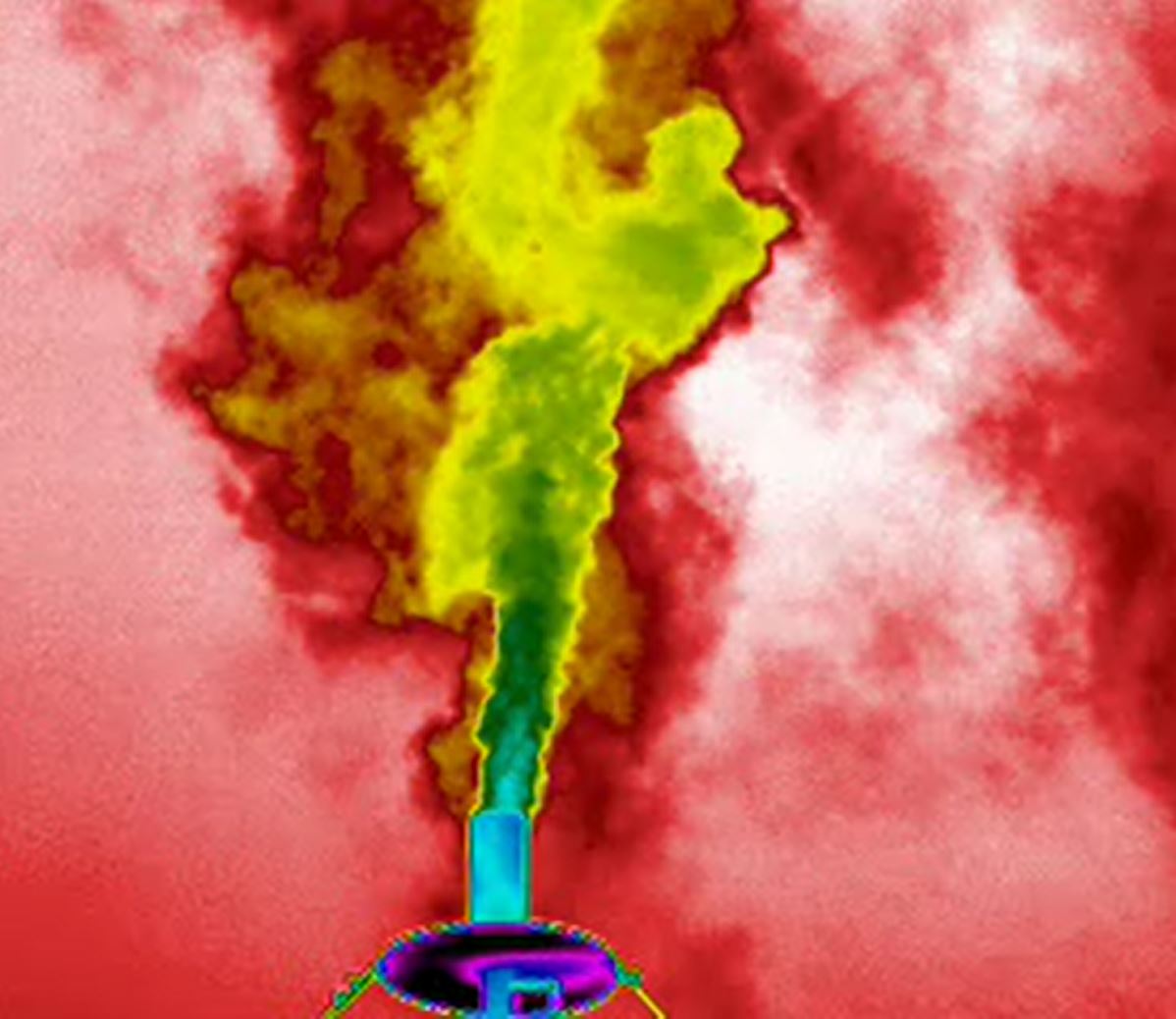
Optical Gas Imaging uses advanced thermal infrared cameras to visualize methane and other hydrocarbon gas emissions that are invisible to the naked eye. OGI is a fast, efficient and proven method for identifying leaks across facilities, helping operators improve safety, reduce emissions and meet regulatory requirements.
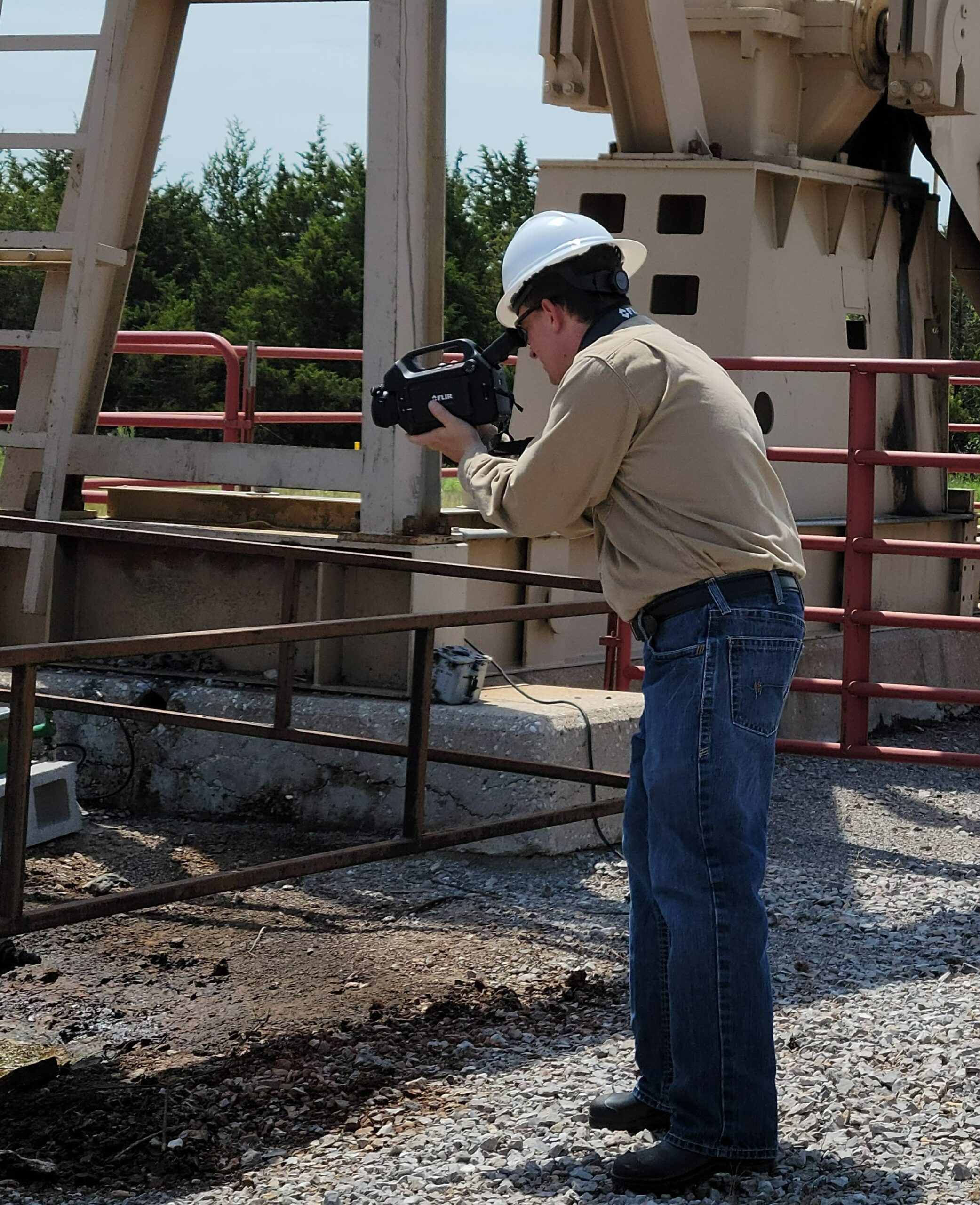
Altamira utilizes state-of-the-art FLIR GFx320 technology and custom reporting tools to provide accurate, thorough inspections and comprehensive documentation.
OGI Services Include
- NSPS Subpart OOOOa scheduling and compliance inspections
- Leak detection surveys and annual reporting
- Detection of difficult-to-find leaks, including elevated components and buried pipelines
- Integration of OGI data into emissions inventories and greenhouse gas reporting
- Custom reporting and data analytics for long-term trend tracking
- Combined survey opportunities with SPCC, BLM, NORM and other compliance programs for increased efficiency
Quantitative Optical Gas Imaging and Emissions Measurement
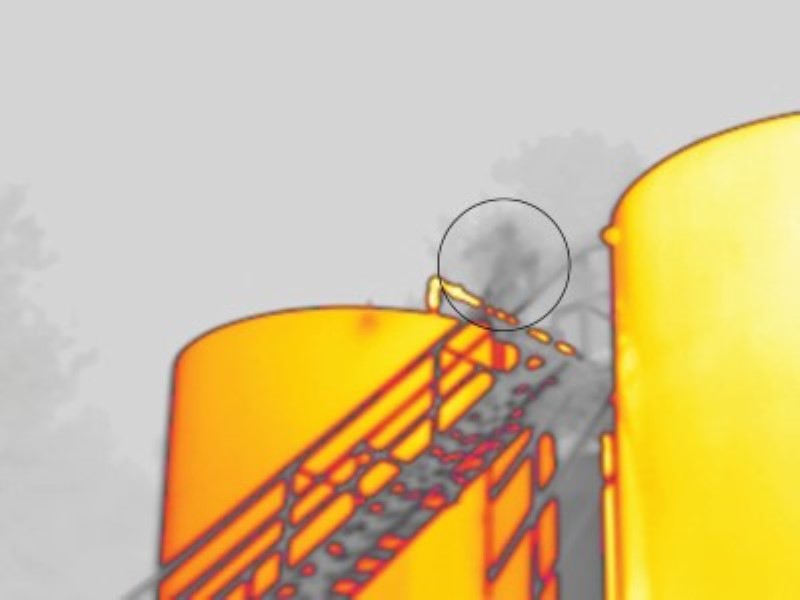
While traditional OGI identifies whether a leak exists, Quantitative Optical Gas Imaging takes emissions monitoring a step further by estimating the leak rate. This allows operators to understand not only where emissions are occurring, but also the magnitude and impact of those emissions.
Using advanced QOGI methodologies and years of field experience, Altamira helps clients transform leak detection data into meaningful business intelligence.
QOGI Services Include
- Emission rate quantification for methane and other gases
- Data generation for ESG and sustainability reporting
- Estimation of product and revenue losses resulting from leaks
- Prioritization of repairs based on operational, financial and environmental impacts
- More informed maintenance and capital allocation decisions
- Enhanced understanding of facility emissions performance
The Power of Combining OGI and QOGI
Together, OGI and QOGI provide a complete emissions management solution.
OGI answers:
“Do we have a leak, and where is it?”
QOGI answers:
“How much is leaking, and how should we prioritize repairs?”
By combining rapid leak detection with emissions quantification, operators can move beyond simple compliance and make data-driven decisions that improve operational efficiency, reduce emissions and maximize return on maintenance investments.
Frequently Asked Questions About Optical Gas Imaging
Choose QOGI when you need quantified emission data for greenhouse gas reporting, sustainability disclosures, methane performance certification, emission reduction verification or ESG investor reporting. Standard OGI is sufficient for basic leak detection and regulatory LDAR compliance. QOGI adds the emission quantification layer needed to manage and report methane performance beyond simple detection.
QOGI accuracy depends on camera type, wind conditions, distance to the source and image quality. When conducted under favorable conditions by trained operators, QOGI measurements can achieve accuracy within 25 to 50 percent of actual emission rates, which is sufficient for regulatory reporting and emission trend analysis, though not as precise as direct measurement methods for single-point sources.
QOGI supports compliance with EPA’s Subpart W greenhouse gas reporting rule (GHGRP), which requires quantified emission estimates from oil and gas sources. It also supports voluntary emissions reduction programs, corporate sustainability reporting, methane performance certifications such as MiQ or Equitable Origin and EPA’s Methane Challenge Program, where documented emission reductions are required.
Standard OGI detects and visualizes leaks qualitatively, confirming their presence and location. QOGI adds quantification capability by analyzing the optical density, plume behavior and wind conditions captured in the infrared imagery to estimate leak rate. This makes QOGI more valuable for operators who need actual emission quantities for reporting, verification or emission reduction program tracking.
Quantitative Optical Gas Imaging (QOGI) combines traditional OGI camera technology with advanced software algorithms to estimate the actual emission rate from a detected gas leak, rather than simply visualizing its presence. QOGI provides quantified emission data that supports accurate emission inventories, regulatory reporting and prioritization of repair efforts.
Altamira’s OGI services include camera inspections conducted by trained, certified operators, identification and documentation of leak locations, photographic and video evidence capture, preparation of inspection reports meeting regulatory documentation requirements and recommendations for repair prioritization. They support both compliance-driven inspection programs and voluntary methane emission reduction initiatives.
Traditional Method 21 uses a handheld gas analyzer to measure VOC concentration at individual component surfaces, which is labor-intensive and can only check one component at a time. OGI cameras scan entire pieces of equipment rapidly, making it far more efficient for covering large facilities. Regulatory programs typically allow facilities to use OGI as an alternative to Method 21 inspections when using EPA-approved camera specifications.
OGI inspections cover a wide range of equipment including valves, flanges, connectors, pump seals, compressor seals, pressure relief devices, open-ended lines and thief hatches on storage tanks. Any component that can potentially leak VOCs or methane is a candidate for OGI inspection as part of a Leak Detection and Repair (LDAR) program.
Yes. EPA’s LDAR regulations under 40 CFR Part 60 (NSPS) and 40 CFR Part 63 (MACT/NESHAP) require OGI-based inspections for oil and gas facilities, natural gas processing plants and other regulated sources. NSPS Subpart OOOOa and the updated Subpart OOOOb and OOOOc rules specify inspection frequencies, camera specifications and documentation requirements for OGI surveys.
Optical Gas Imaging (OGI) is an inspection technique that uses specialized infrared cameras to visualize gas leaks from equipment that would be invisible to the naked eye. OGI cameras detect the infrared absorption signature of volatile organic compounds (VOCs) and methane, making leaks visible as a plume in the camera’s viewfinder and allowing operators to quickly identify and locate emission sources.
For more details, download our Optical Gas Imaging brochure.
Why Choose Altamira?
Altamira’s strength lies in the combination of experienced field personnel, advanced technologies and custom digital reporting solutions. Our team includes ITC-certified professionals with extensive experience implementing both traditional OGI and advanced QOGI programs. We continuously invest in emerging technologies that help clients stay ahead of evolving regulations, industry expectations and market demands.
Our services help clients:
- Maintain regulatory compliance
- Improve environmental performance
- Support ESG initiatives
- Reduce product loss
- Enhance worker and facility safety
- Access meaningful emissions insights through robust data analytics
Supporting Smarter Emissions Management
Whether your goal is regulatory compliance, methane emissions reduction, ESG reporting or operational optimization, Altamira’s Optical Gas Imaging and Quantitative Optical Gas Imaging services deliver the visibility and data needed to make confident decisions.
Contact Altamira today to learn how OGI and QOGI can strengthen your emissions management strategy.
